
When we think about flu season, we usually think about the calendar. Fall arrives, temperatures drop, people spend more time indoors, and suddenly everyone seems to be talking about influenza.
But there’s another factor worth paying attention to: humidity.
The temperature and humidity inside a building can influence the indoor environment in ways that may affect how respiratory viruses behave and how comfortable people feel. That makes humidity an important part of a comprehensive indoor air quality (IAQ) strategy—especially during the months when respiratory illnesses are more common.
Why Does Humidity Matter During Flu Season?
Influenza and other respiratory viruses spread primarily through respiratory particles released when infected people breathe, talk, cough, or sneeze. What happens to those particles after they enter the air can be influenced by environmental conditions, including temperature and relative humidity.
Research has found that influenza virus survival and transmission can vary depending on humidity levels. Extremely dry indoor air may create conditions that allow some respiratory viruses to remain infectious longer, while very high humidity can create its own indoor air quality problems.
That’s why maintaining a balanced indoor humidity level is important.
The Problem With Air That Is Too Dry
During cooler months, heating systems can significantly reduce indoor relative humidity. The result can be dry air that contributes to:
- Dry skin and lips
- Irritated eyes
- Dry or scratchy throats
- Nasal discomfort
- Increased static electricity
- General respiratory discomfort
Dry indoor air can also affect the behavior of respiratory particles. Under certain conditions, smaller particles can remain suspended in the air longer, potentially increasing opportunities for exposure.
But More Humidity Isn’t Better
It might seem logical that adding humidity would solve the problem. Not necessarily.
Excessive indoor humidity can encourage mold and microbial growth, contribute to musty odors, and create an environment that can negatively affect indoor air quality.
High humidity can also make a space feel warmer and less comfortable.
The goal isn’t to make indoor air as humid as possible. The goal is to maintain a healthy, comfortable balance.
What Is the Right Indoor Humidity Level?
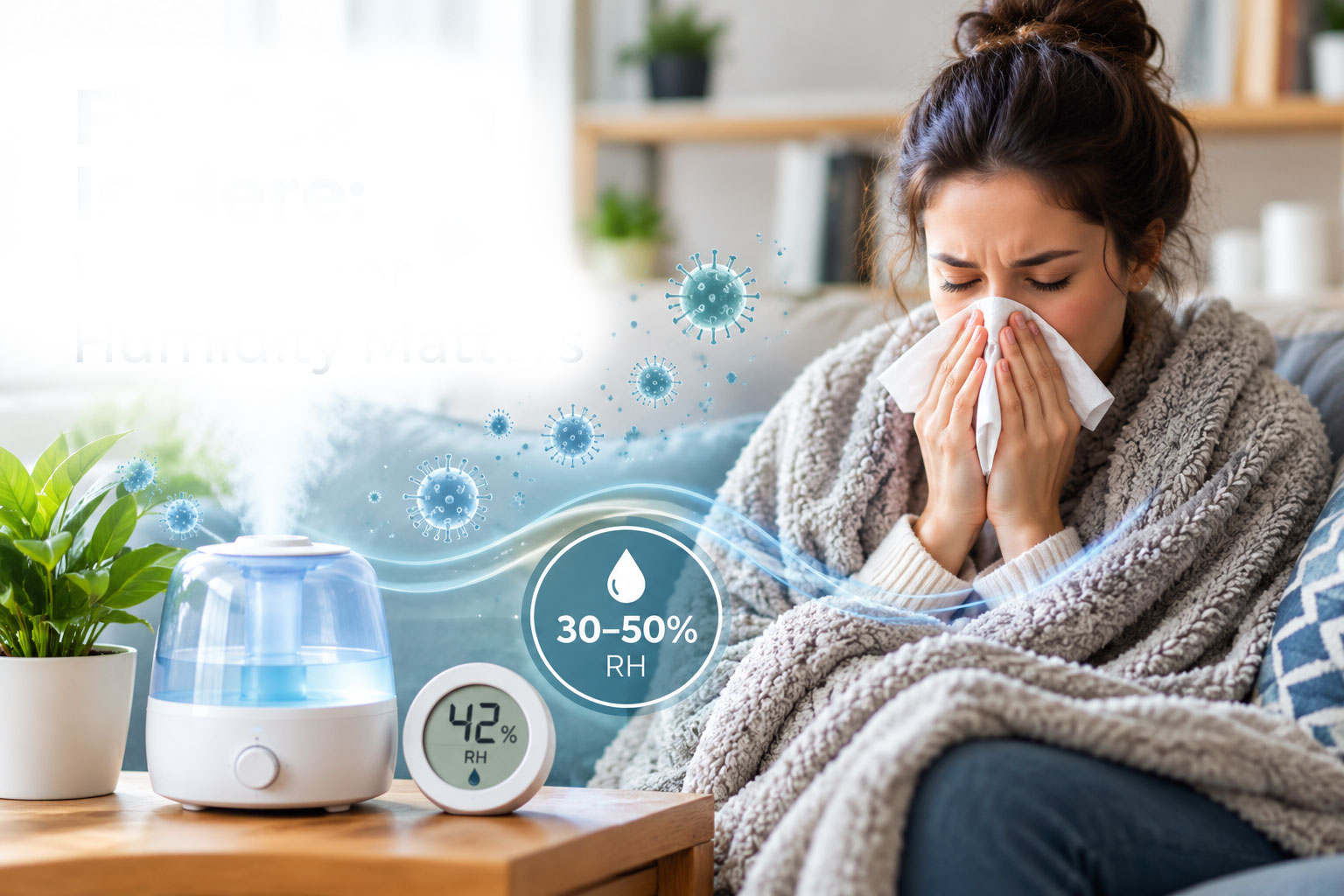
For many occupied buildings, maintaining indoor relative humidity somewhere around 30% to 50% is commonly recommended as a practical target range.
The ideal level can vary depending on the building, climate, occupants, HVAC system, and other factors.
A simple hygrometer or humidity monitor can help you understand what’s actually happening inside your building.
You can’t manage what you don’t measure.
Humidity Is Only One Piece of the IAQ Puzzle
Managing humidity is important, but it shouldn’t be considered a stand-alone solution for flu or other respiratory viruses.
A comprehensive indoor air quality strategy can include:
- Ventilation
Bringing in appropriate amounts of outdoor air can help dilute indoor contaminants. - Filtration
Properly selected and maintained HVAC filtration can help remove airborne particles from recirculated air. - Air Cleaning
Technologies such as UV-based air treatment may be incorporated into HVAC systems or other air-cleaning strategies to help address biological contaminants. - Humidity Control
Maintaining appropriate humidity can help create a more comfortable and balanced indoor environment. - Source Control
Reducing or eliminating sources of indoor pollutants remains one of the most important principles of good IAQ.
Together, these strategies can create a stronger approach to managing indoor air.
Don’t Let the Calendar Be Your Only Warning
Flu season may be associated with certain times of the year, but indoor environmental conditions are changing all the time.
Heating systems turn on. Buildings become more tightly closed. Windows stay shut. People spend more time indoors. Humidity levels fluctuate.
All of these factors can change the indoor environment.
That’s why monitoring your indoor air quality before respiratory illness starts circulating heavily can be more effective than waiting until problems appear.
A Healthier Indoor Environment Starts With Awareness
You don’t need to wait for the first flu outbreak to start thinking about your indoor environment.
Monitor humidity. Maintain your HVAC system. Use appropriate filtration. Consider ventilation and air-cleaning strategies. And pay attention to the conditions inside the spaces where people spend their time.
Because when it comes to indoor air quality, the calendar only tells you what season it is. Your building’s environment tells you what’s actually happening inside.
Flu Season Doesn’t Follow the Calendar. Pay Attention to the Air.
Good indoor air quality is about creating an environment that supports the health, comfort, and well-being of the people who occupy the building.
Humidity is one important piece of that equation—and one that’s easy to measure, monitor, and manage.